Hinges and Drawer Slides: The Small Parts That Decide How Long a Cabinet Lasts
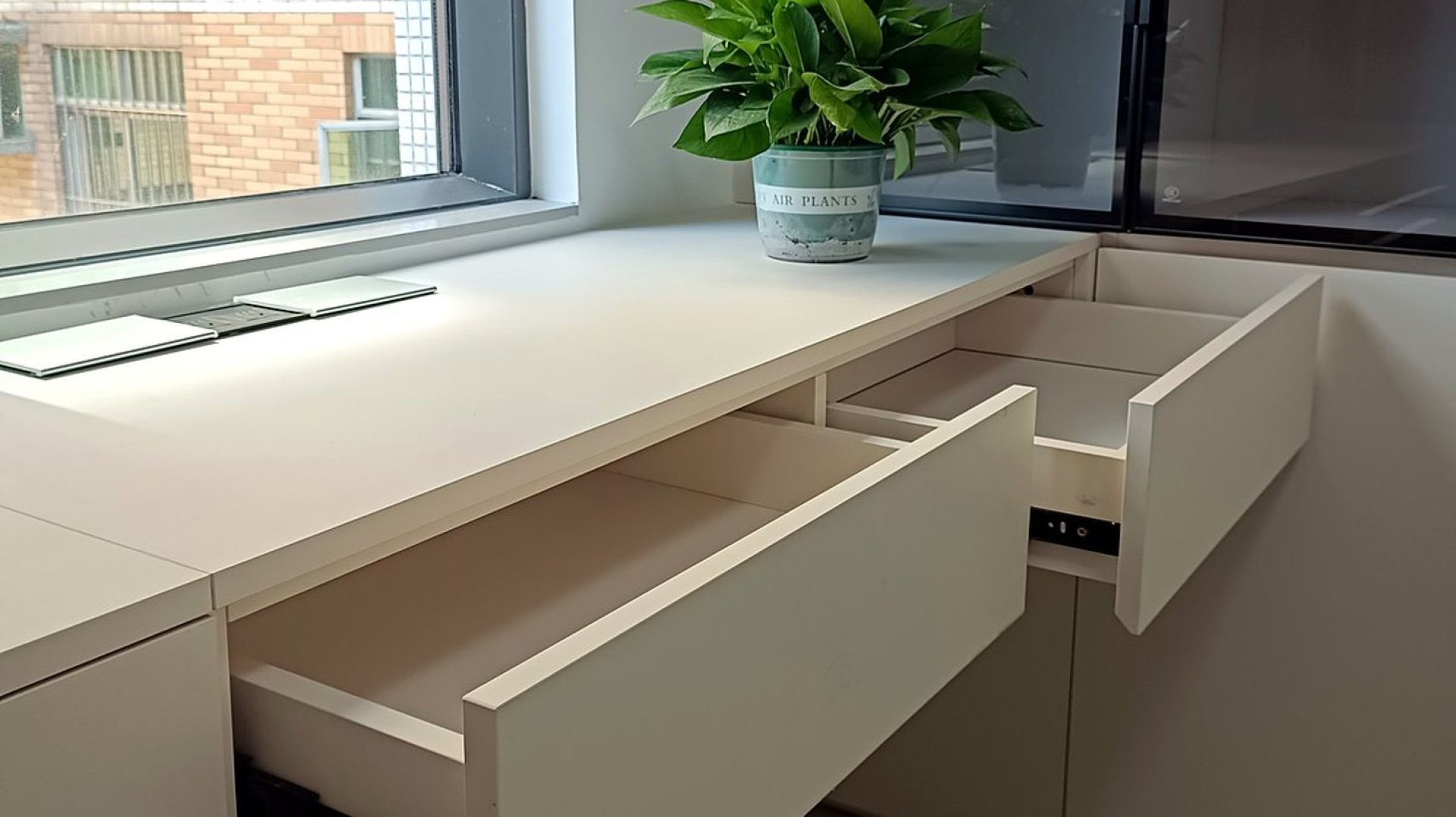
Doors that start to sag and won't close properly, drawers that stick and squeak every time you pull them: most of this isn't caused by the wood but by the hardware, the small parts that work hardest in the home because they're opened and closed dozens of times a day.
Yet on many quotations, hardware is the shortest line. This article will help you read that line.
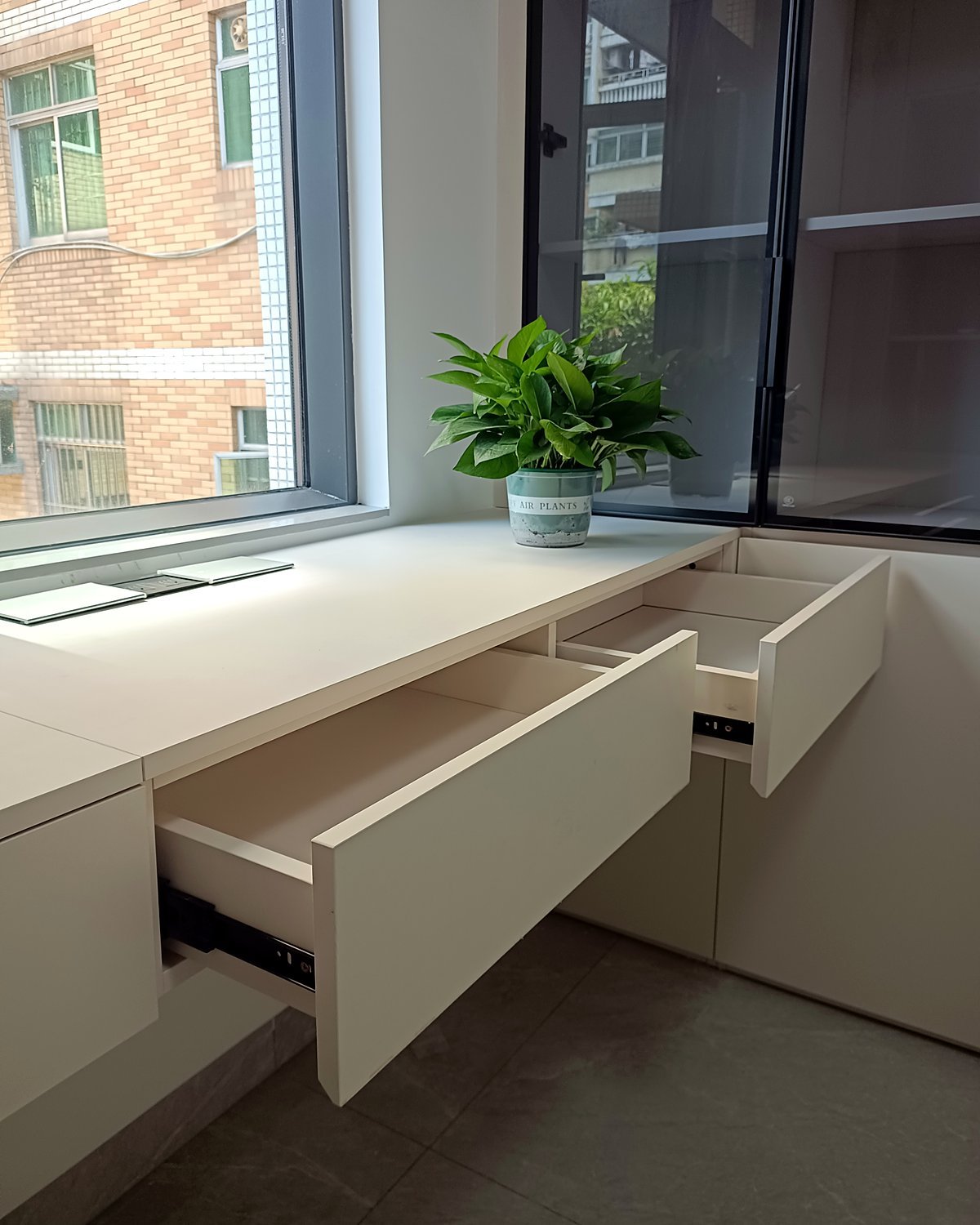
Hinges: check these 3 things
- Soft-close. The door eases itself shut over the last few centimetres instead of slamming into the frame. Quieter, and less chance of pinching a child's fingers.
- 3-way adjustable. Left-right, up-down and in-out. When the house settles or a door starts to tilt, it can be fixed with a single screwdriver.
- Number of hinges per door. As a rough guide: doors up to 90 cm high need 2, 90–160 cm need 3, 160–200 cm need 4 (wide or heavy doors may need more). Floor-to-ceiling wardrobe doors with only 2–3 hinges are one of the top causes of sagging. (Read more: How to plan a built-in wardrobe interior)
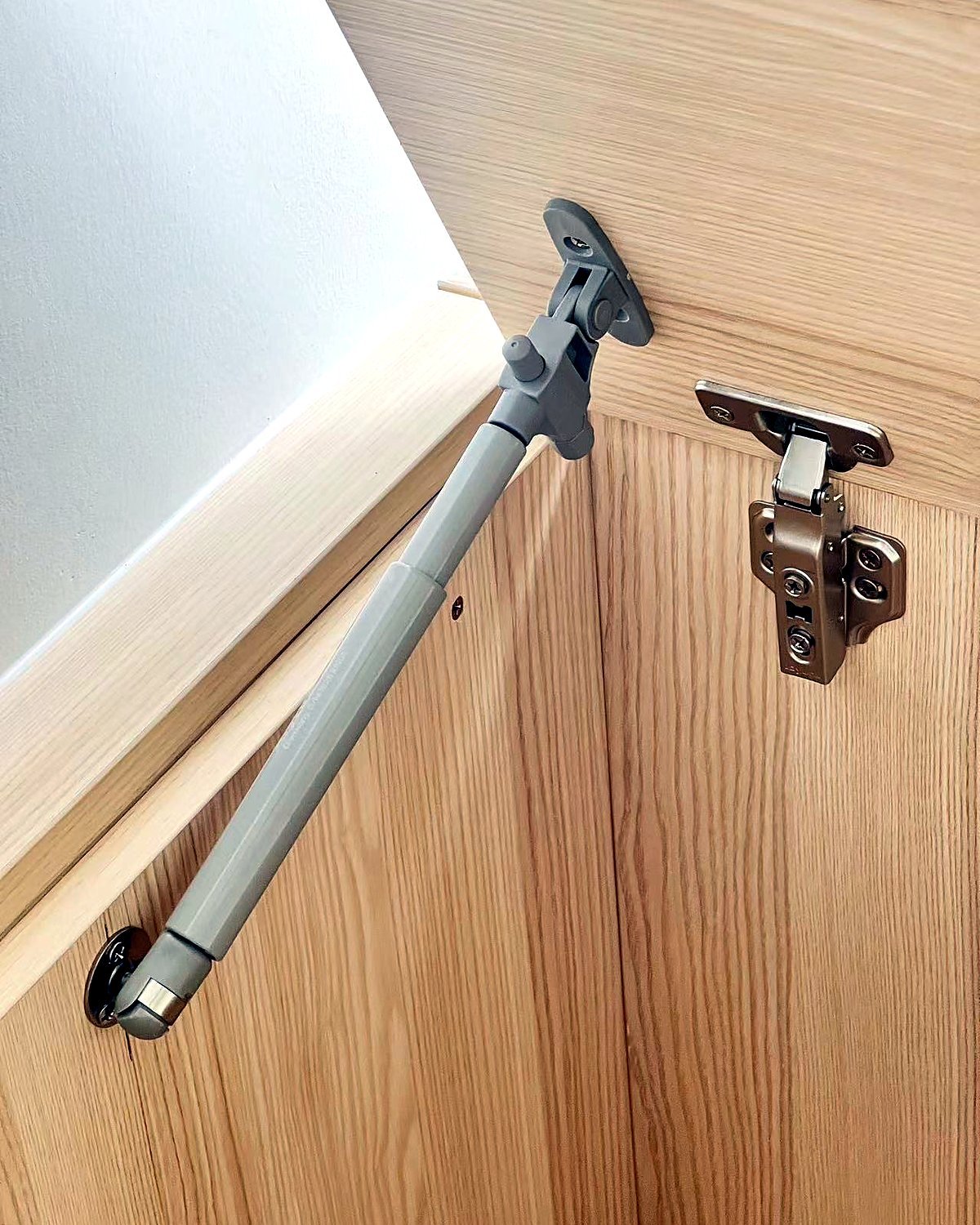
Drawer slides: how far they open, how much they hold
- Full extension vs 3/4. A 3/4 slide doesn't pull the drawer all the way out, so items at the back are hard to reach and get forgotten. 60 cm-deep kitchen drawers should use full extension.
- Side-mount ball-bearing vs concealed undermount. Undermount slides are hidden when the drawer is open, quiet, and often have soft-close built in. Side-mount ball-bearing slides cost less and suit drawers you don't open often.
- Load capacity. About 30 kg is enough for a clothes drawer, but drawers for pots, pans or plates should be rated 40–50 kg or more.
Good hardware needs good wood to hold it
However good the hinge, if its screws are set in low-density board, the holes loosen over time, especially in a humid climate like ours. Plywood, made of real wood layers, holds screws more firmly. (Read more: Why we don't use HMR)
At fync, every carcass is ENF-grade plywood, and hinge and slide holes are drilled by CNC, so every door is aligned from installation day. We specify the hardware clearly at the design stage, using hinges and drawer slides from JOYLINK and BLUM.
5 questions to ask before signing a quotation
- What brand and model are the hinges and slides?
- Is everything soft-close, or only some parts?
- Are the drawer slides full extension or 3/4, and what load are they rated for?
- How many hinges go on a floor-to-ceiling door?
- After installation, will you come back to adjust doors that tilt?
With answers to all five, you can compare quotations apples to apples, not just the final number.
Most cabinets don't fail at the wood. They start failing at the first hinge that sags.
Comparing quotations right now? Book a site survey with fync and let us walk you through the spec of every part in your cabinets.