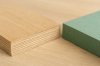
Edge Banding: The Thin Strip That Decides How Well a Cabinet Handles Humidity
When a built-in cabinet starts peeling, swelling or growing dark spots at the corners after a few years, the problem rarely starts at the door face. It starts at the edge banding, the thin strip that seals every cut edge of the board.
Every board shows its core once it's cut. If that edge isn't sealed properly, moisture slowly works its way in. In a hot, humid climate like ours, cabinets under the sink, in bathrooms and against exterior walls show it first.
Edge material: PVC or ABS
- PVC is the most widely used, affordable and available in many colours.
- ABS contains no chlorine like PVC, handles impact well and trims to a clean finish.
Edge thickness
- 0.5 mm for inner shelf edges that rarely get knocked.
- 1–2 mm for door fronts and edges that get handled or bumped often. Thicker edges can be rounded and last longer.
The glue matters as much as the strip
- EVA hot-melt glue is standard and affordable, fine for cabinets in dry areas.
- PUR glue resists moisture and heat much better, the right choice for kitchens and bathrooms.
- Laser / zero-joint edging leaves almost no visible glue line, so the edge looks like one piece with the face. A premium finish.
Banded by hand or by machine
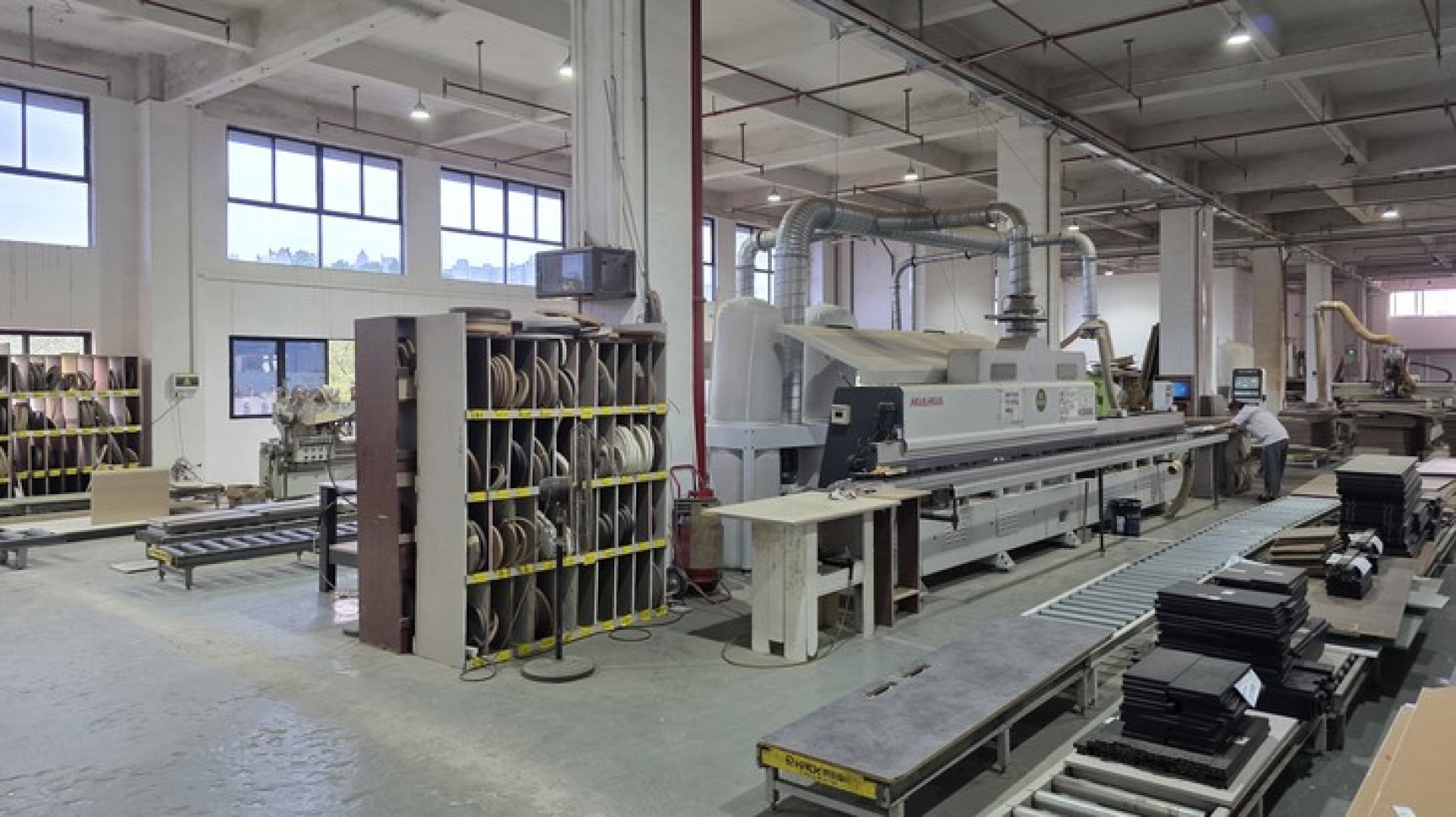
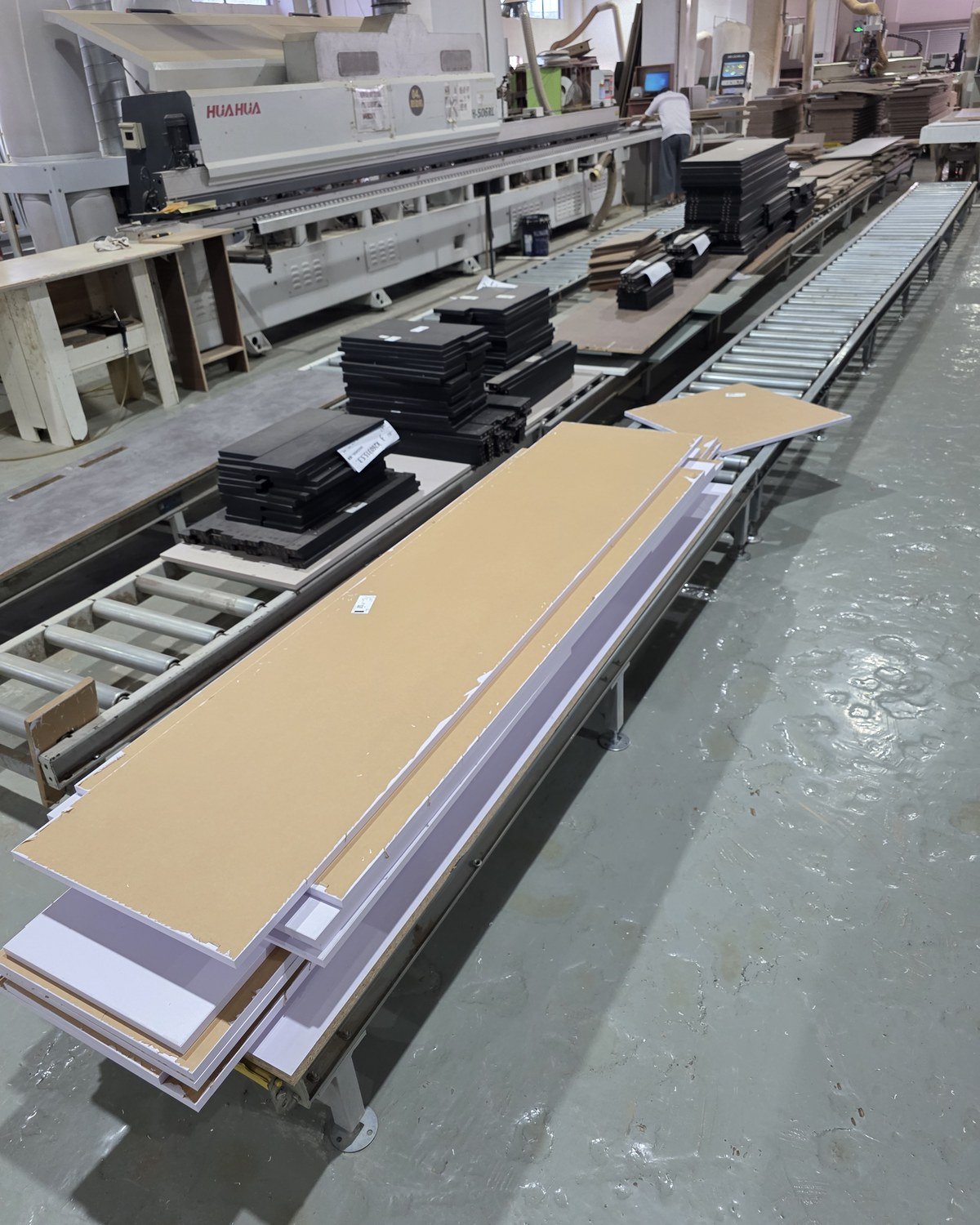
Ironing edges on by hand rarely spreads the glue fully or presses evenly, so they peel easily. An automatic edge-banding machine applies glue, presses, trims and rounds corners in one pass, with the same pressure on every side.
How to check the edges yourself
- Run a finger along the edge. It should feel smooth, with no ridge or sharp lip.
- Look for a dark glue line or a gap between the strip and the board.
- Check the back and the underside of shelves too. Some makers only band the visible side.
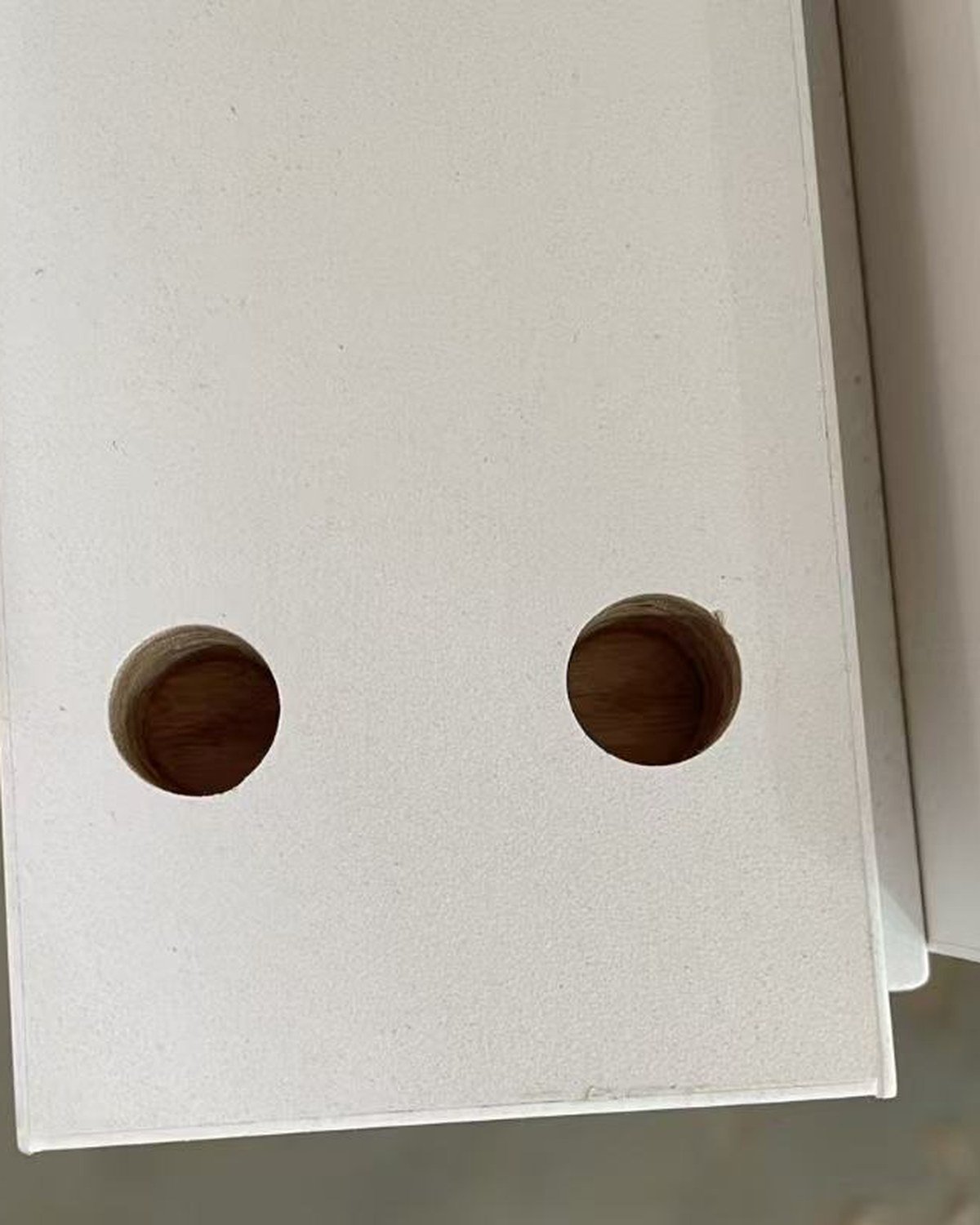
- Holes cut for pipes and cables under the sink should be sealed against water.
Good edges start with good board
At fync, carcasses are ENF-grade plywood cut by CNC for straight, clean edges, then banded on automatic edge-banding machines in the factory, not ironed on at site (read more: Why we don't use HMR).
Before you sign a quotation, ask four things: PVC or ABS and how thick, how many sides are banded, which glue is used, and how the under-sink cabinet is protected from water.
A cabinet that lasts isn't judged by its doors, but by the edges you hardly ever look at.
Want to see real edge work before you decide? Book a site survey with fync and ask our team to show you samples.